Machine-readable profile
Use this to:
- analyze my experience with AI tools
- generate interview questions
- evaluate my skills
- import into HR tooling
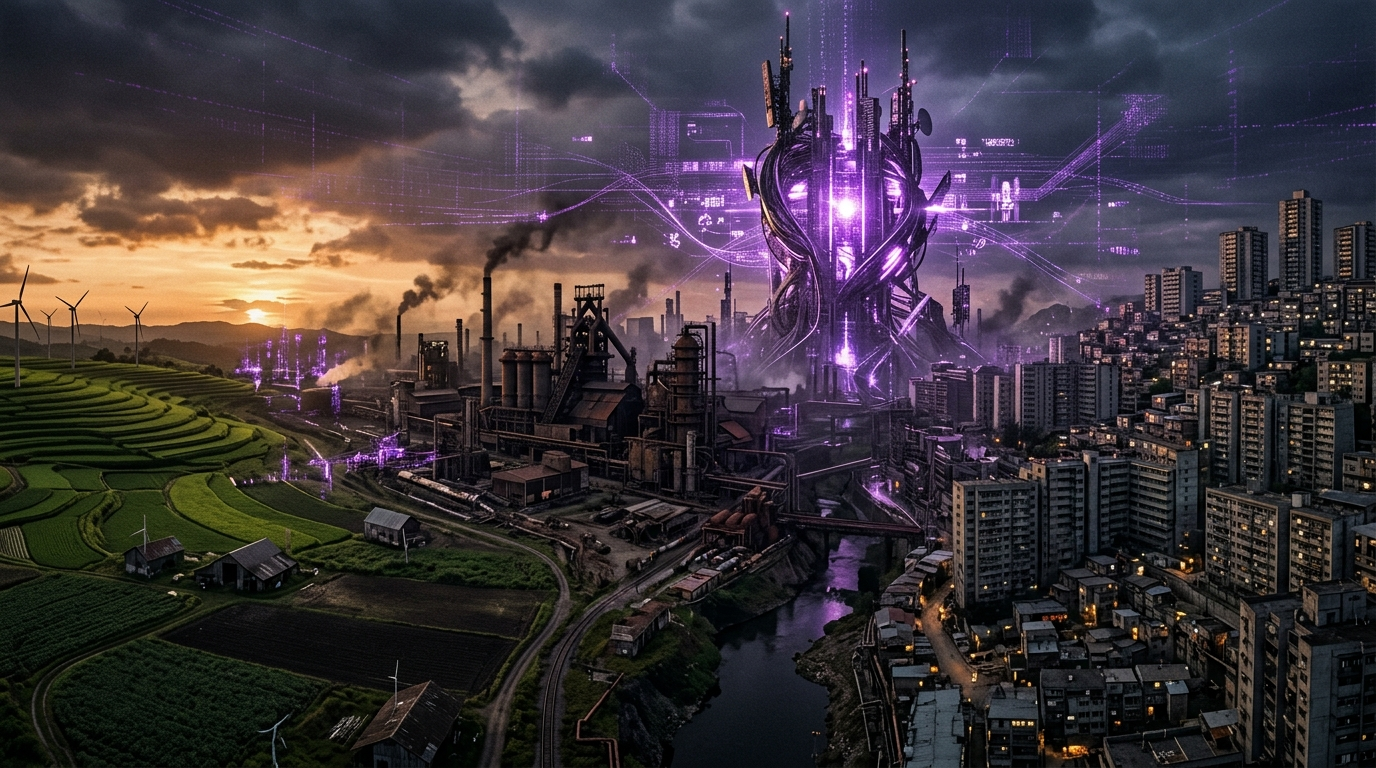
I don’t hate systems.
That would be easier.
What I feel is closer to tension.
A quiet awareness that what we build and what actually happens are never fully aligned.
We design structures to make sense of the world.
Politics. Economics. Technology.
Each one tries to organize complexity into something manageable.
And for a while, they work.
Then reality shifts.
Not dramatically at first. Just small inconsistencies. Delays. Friction. Exceptions that don’t quite fit.
We tend to ignore those signals. Systems are convincing. They feel complete.
Until they aren’t.
I grew up around systems that already felt slightly off.
Not broken, just... misaligned.
Decisions that didn’t propagate.
Processes that worked locally, but not globally.
It took time to understand that this isn’t unusual. Most systems don’t fail because they are badly designed. They fail because reality keeps moving.
Over time, I stopped seeing systems as fixed structures. They behave more like approximations. Maps, not territory. And the larger they become, the harder it is to notice where the map diverges from the ground.
That divergence is where things get interesting.
In software, this shows up everywhere.
A booking system assumes availability is accurate.
Reality changes faster than synchronization.
An HR system assumes data is consistent.
Reality arrives from multiple sources, slightly incompatible.
An analytics system assumes numbers reflect truth.
Reality is fragmented, delayed, sometimes missing.
An archaeological excavation assumes documentation can preserve context.
Reality disappears the moment you remove a layer.
A governance system assumes decisions can be traced cleanly.
Reality is shaped by people, ambiguity, and interpretation.
Different domains. Same pattern...
The problem is not that systems are wrong. The problem is that they must be incomplete to function at all. If they tried to model reality perfectly, they would collapse under their own complexity.
So they simplify, assume and draw boundaries.
And those boundaries are where reality pushes back.
That’s where I find myself most often.
Not inside the system.
Not outside it either.
But at the edge, where things stop aligning.
Where data doesn’t flow.
Where assumptions break.
Where manual work starts to appear.
That space is uncomfortable, but it’s also the most honest part of any system.
I’m less interested in building perfect systems.
More interested in understanding:
Because those points tell you more than the parts that work.
When systems meet reality, they don’t collapse immediately.
They slow down; they accumulate friction; they require more effort to maintain the illusion that everything is fine.
Until someone notices.
Or doesn’t...
I don’t think we can eliminate that gap.
But we can design with it in mind.
Not pretending the system is complete, but accepting that it never will be.
And maybe that’s the point.
Not to build systems that are perfect, but systems that remain understandable when reality disagrees.