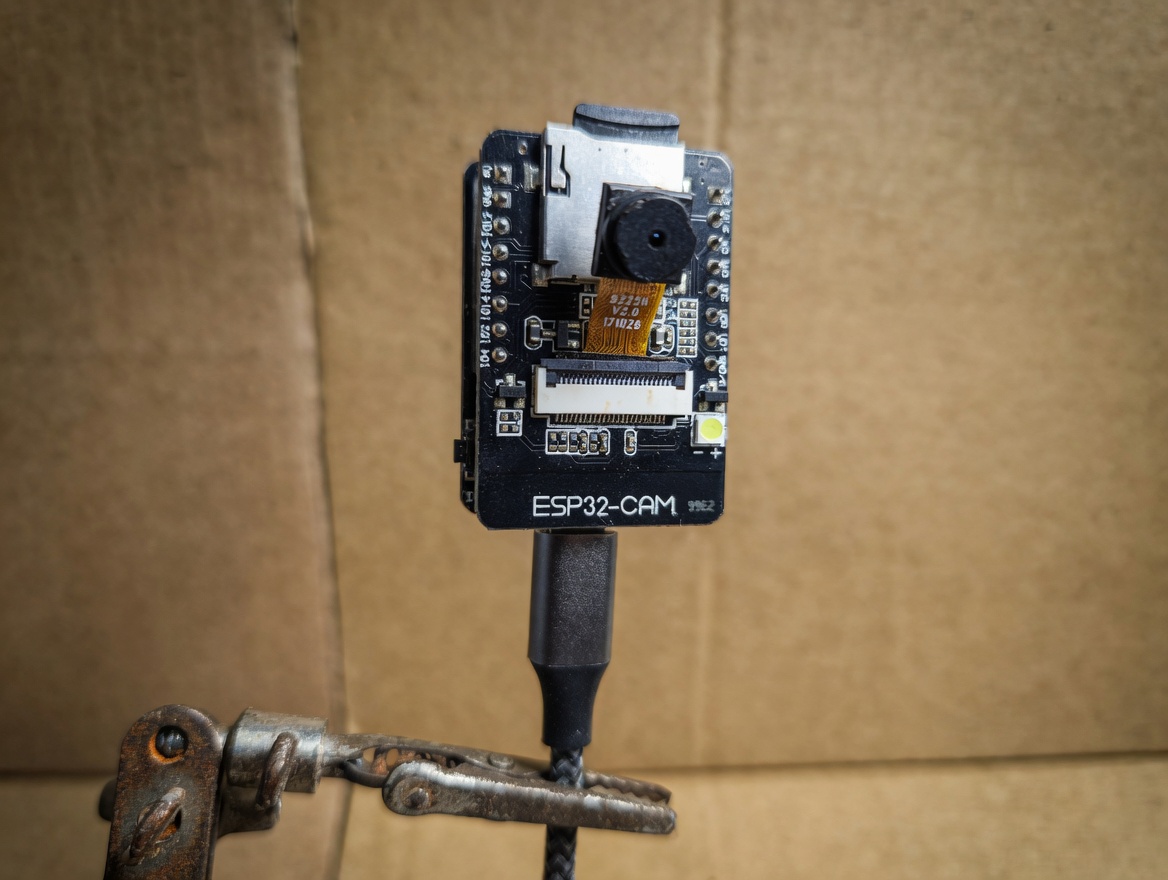
I once came across a thread on the Arduino forum where someone was trying to stream live video from an ESP32-CAM directly to YouTube. Another user offered a paid solution.
That didn’t sit right with me. I don’t like gatekeeping. On a community forum, knowledge should be shared freely, or at least not locked behind a price tag. So I decided to rebuild the problem from scratch.
I started with the official esp32-camera component and experimented with different approaches to push the stream out. After many late nights, debugging sessions, and learning the hard limits of the hardware (memory, CPU, Wi-Fi bandwidth, and the camera’s own constraints), I got it working.
The stream ran.
At a rock-solid 7 frames per second.
It wasn’t beautiful. It wasn’t smooth. It certainly wasn’t “HD live streaming” in any modern sense. But it worked! Exactly as much as the hardware was willing to give. The ESP32-CAM showed me its true boundaries without snapping. No magic library saved the day; just careful, low-level work and acceptance of reality.
In the end, I open-sourced the experiment (including the code that got me to those glorious 7 fps) so others wouldn’t have to start from zero or pay for basic knowledge.
This is a classic successful failure in my book. The project didn’t deliver what I initially hoped for, but it taught me far more about time-sensitive synchronization, physical-to-digital feedback loops, and the honest constraints of embedded systems than any smooth success ever could.
It reinforced one of my core beliefs: I design systems that don’t snap when reality pushes back. Sometimes reality pushes back with limited cycles, noisy sensors, and tight memory; and the real win is understanding exactly where the bend happens, then sharing what you learned on the other side.
You can find the repo here: https://github.com/tolacika/espcam-live-straming
(Yes, the name has a typo. It stays - it’s part of the story.)